Design-Led Growth: Scaling Hexorial to 1.3M+ Users Without Funding
Hexorial Studio
Co-Founder, Designer & Chief Product Officer (CPO)
Remote | Born In July 2019 / CORP: Sept 2020
Design made accessible. Creativity made scalable. Growth made inevitable. Hexorial is a design-tech startup on a mission to democratize design, giving beginners a launchpad and experts a performance edge. Our products streamline workflows, power creativity, and reach over 1.3 million plus ( still counting ) users globally across the Figma, Adobe ecosystems and more.
Dragoon and I started Hexorial as a side project. I handled the technical side, he ran everything else: product, brand, growth, hiring, strategy. I'll be honest, he'd push for things I thought we weren't ready for, partnerships with Adobe, Figma and IxDA when we were still figuring ourselves out. But he was usually right. What I respected most was how he could execute with almost no resources and still make it work. We didn't always agree on everything, but I trusted him to handle the business side while I focused on building. He kept things simple when they could've gotten messy, and that's why we scaled.
- Manthan, cofounder
Overview
As Co-Founder and CPO, I built Hexorial from a passion project into one of the world’s largest design plugin ecosystems - without external funding, paid marketing, or a large team. We chose independence. That means growing with care, not hacks. A product people love, and a business built to last - in harmony.
I architected every layer: brand, product, operations, growth, hiring and user experience. The result? A revenue-driven, award-winning, bootstrapped business that reshaped how creative teams, people work and collaborate across platforms.
My Role & Leadership Impact
Scaled Hexorial to 1.3M+ users ( and counting ) and 120K+ MAUs organically, with zero marketing budget, setting new user acquisition benchmarks within Figma and Adobe ecosystems.
Drove high-impact partnerships and led end-to-end execution, making us the only Indian company selected by both Adobe (Design Fund) and Figma (Creator Fund) simultaneously; building ecosystem tools in direct collaboration with their teams, now powering experiences for millions of users worldwide.
Led Hexorial from zero to rise as one of the leading design tool companies, building and scaling a global suite of creative tools used by millions of creators worldwide, and ranked among the top global companies in the design tools ecosystem.
Owned brand, product, and creative strategy, from high-level positioning to micro UX decisions, ensuring a balance of aesthetic excellence and business performance.
Built end-to-end growth engine: acquisition → activation → retention → monetization → referral, driving 200%+ user growth and 98% increase in revenue.
Bootstrapped from 0 → global-led hiring, operations, GTM strategies, documentation, and SOP development to run a lean, high-impact team.
Built a Gumroad-inspired hiring model. Assembled and managed a global team of 10 with async-first workflows.
Led rebrand, redesign and UX revamp that drove 98% increase in installs, 95% increase in retention, and 85% lift in user satisfaction.
Led Hexorial’s fast-paced open-source illustrations project from the ground up, managing a team of designers to deliver 400+ high-quality illustrations with speed, consistency, and creative excellence.
Designed pitch decks and product narratives that secured industry-defining grants and partnerships from Figma, Adobe, and IxDA - making Hexorial India’s most awarded design-tech company.
Partnered with global design leaders (Adobe, Figma, IxDA ) to build a user-first design system integrated with marketplace insights and feedback loops.
Co-led market research and roadmap strategy, aligning feature rollouts with user demand and emerging design trends to future-proof the product line.
Managed design, content, and dev teams to ensure fast execution and consistent excellence across every product touchpoint.
The Design Strategy Behind Hexorial
1. Starting Where Others Weren’t Looking
Hexorial didn’t start as a “company.”
It started as a curiosity "side project".
Back in 2019, Figma was still in its early innings. The plugin ecosystem was almost non-existent, and there were small but frustrating gaps in the creative workflow that no one was addressing.
We found those gaps early - before the market even realized they existed. And we didn’t stop at Figma. We spotted similar opportunities in Adobe’s ecosystem and built tools and integrations there, too.
The magic was in timing: finding the right ideas and acting at the perfect moment. Pair that with decision-making discipline and high-impact teams, and growth became inevitable.
We kept our tools simple enough for anyone, fast enough for professionals, and secure enough to trust instantly. This wasn’t just about making good tools; it was about removing every barrier so creativity could flow.
We targeted everyone, but designed like we were making something for ourselves. And we played a quiet game with timing - launching early into every emerging opportunity so we could own mindshare before competitors noticed.
Lesson learned: Design is not just how it looks; it’s where - and when - you choose to play.
2. Design as the Growth Engine - Not a Department
From day one, design wasn’t a “stage” in our process; it was the process.
We made three deliberate choices:
Design-Led Roadmapping
Every feature idea was framed visually before it was scoped technically. We refused to build what we couldn’t see in the user’s mental model.Micro-Delight > Mega-Features
Instead of racing to launch “big” tools, we obsessed over small moments of joy; Simple drag and drop, loading animations, smooth transitions, intuitive defaults. These steps and micro-interactions became our silent brand ambassadors.Ship Fast, Polish in Public
We designed for adaptability. Every release shipped at ~80% visual completion, letting real-world feedback shape the last 20%. This loop of design → feedback → refinement became both our product process and our marketing engine.
3. Business Strategy: Designing for Outcomes
We didn’t measure success in features shipped - we measured it in impact created. Our business strategy was simple: build products that earned their own distribution.
Key strategic pillars:
High-LTV, Low-CAC: Free tools drove adoption; premium integrations and AD model drove revenue.
Ecosystem Lock-In: By building for multiple platforms (Figma, Adobe), we reduced dependency risk and expanded market reach.
Timing Advantage: Early entry into emerging ecosystems meant less competition and higher organic visibility.
Velocity as a Moat: A living design system allowed us to respond to trends and user requests faster than larger, slower teams.
Our core KPIs:
Active Users (DAU/MAU): Tracked weekly to measure engagement velocity.
Adoption Rate: % of new signups from organic shares and referrals.
Retention Rate (Day 30): Signaled product stickiness and value delivery.
Feature Utilization: Identified which tools drove the most repeat usage.
Revenue per Active User (RPAU): Guided monetization experiments without hurting free user growth.
These KPIs didn’t just measure performance - they shaped our roadmap. If a feature didn’t move at least one metric meaningfully, it was cut or reimagined.
4. Brand Without a Budget
We couldn’t afford paid ads, so design had to pull double duty: product and promotion.
The brand wasn’t “designed” in a single sprint - it was built in hundreds of micro-decisions:
A consistent visual rhythm across UI, landing pages, and even release notes.
A tone of voice that was sharp, curious, and human - no corporate jargon.
Highly shareable visuals that made our tools screenshot-worthy in a crowded feed.
Super simple and highly accessible interface designed to appeal to a mass audience.
People didn’t just use our tools; they shared them. Our design was our marketing.
5. Bootstrapped = Ruthless Design Prioritization
With no VC funding, every design choice had to answer:
Will this directly increase adoption, retention, or advocacy?
We cut edge-case designs unless we saw repeat demand.
We treated usability debt like financial debt - manageable, repayable, but never allowed to sink our speed. We cut good ideas to protect great ones.
6. The Compounding Effect of Design Systems
When we hit 100k users, scaling updates became painful. That’s when we invested in a living internal design system and backend tech - for both consistency and velocity.
Components built for flexibility, not one-offs.
Visual tokens for instant adaptation across plugin types and updates.
New tools launched in weeks instead of months, without sacrificing brand coherence.
7. Design as Culture
Our biggest win?
We didn’t just use design to grow; we made design + business the language of the company. Even non-designers/devs thought in business terms/KPI's, prototypes, critiqued flows, and debated interaction models. That’s why our products felt simple, coherent, intentional, and human; because the thinking behind them was.
Key Metrics & Achievements
At Hexorial, we scaled from 0 to 1.3M+ users (and counting), with over 120K monthly active users and 10K new users joining every week, all bootstrapped, with zero marketing spend. We become world's top 10 design tool companies, ranking 3rd in South Asia, India's first largest eco. Revenue surged by 98%, fueled by design-led growth and strong product-market fit.
We became one of the top 3 plugin ecosystems globally on Figma and the first Indian company ever featured in their ecosystem. Our products and work earned recognition from Adobe, Figma Creator Fund, Figma Config, Interaction Design Association ( IxDA ), Product Hunt (#1 Product of the Day), and top design platforms like Awwwards, Prototypr, Muzli & more.
We’re ranked among the top global companies by likes, installs, and plugin numbers with 4.8 rating on Figma and Adobe Marketplace and we’re the first and only Indian company to achieve this unprecedented level of response.
With a 95% conversion rate and 85%+ user satisfaction, we didn’t just build a product - we built a movement. Hexorial secured backing and attracted grants, support and partnership from Figma, Adobe, and IxDA, and secured strategic integrations with platforms like IconScout (now part of LottieFiles), cementing our position as a global leader in design-tech tools and plugins.
Used by teams at Adobe, Figma, Google, Facebook, Slack, Box, Paytm, countless agencies, and more - powering creativity, collaboration, and growth across industries.
We spotted gaps early, built at the perfect time, and grew with teams that could execute with precision. We kept our tools simple, fast, secure, and creativity-first. We launched early, learned fast, and stayed ahead of the curve - not by chasing trends, but by setting them.
Design wasn’t our polish at the end - it was the engine, the compass, and the accelerant.
And that’s the playbook we’ll keep running:
Design it. Ship it. Learn. Repeat.
—
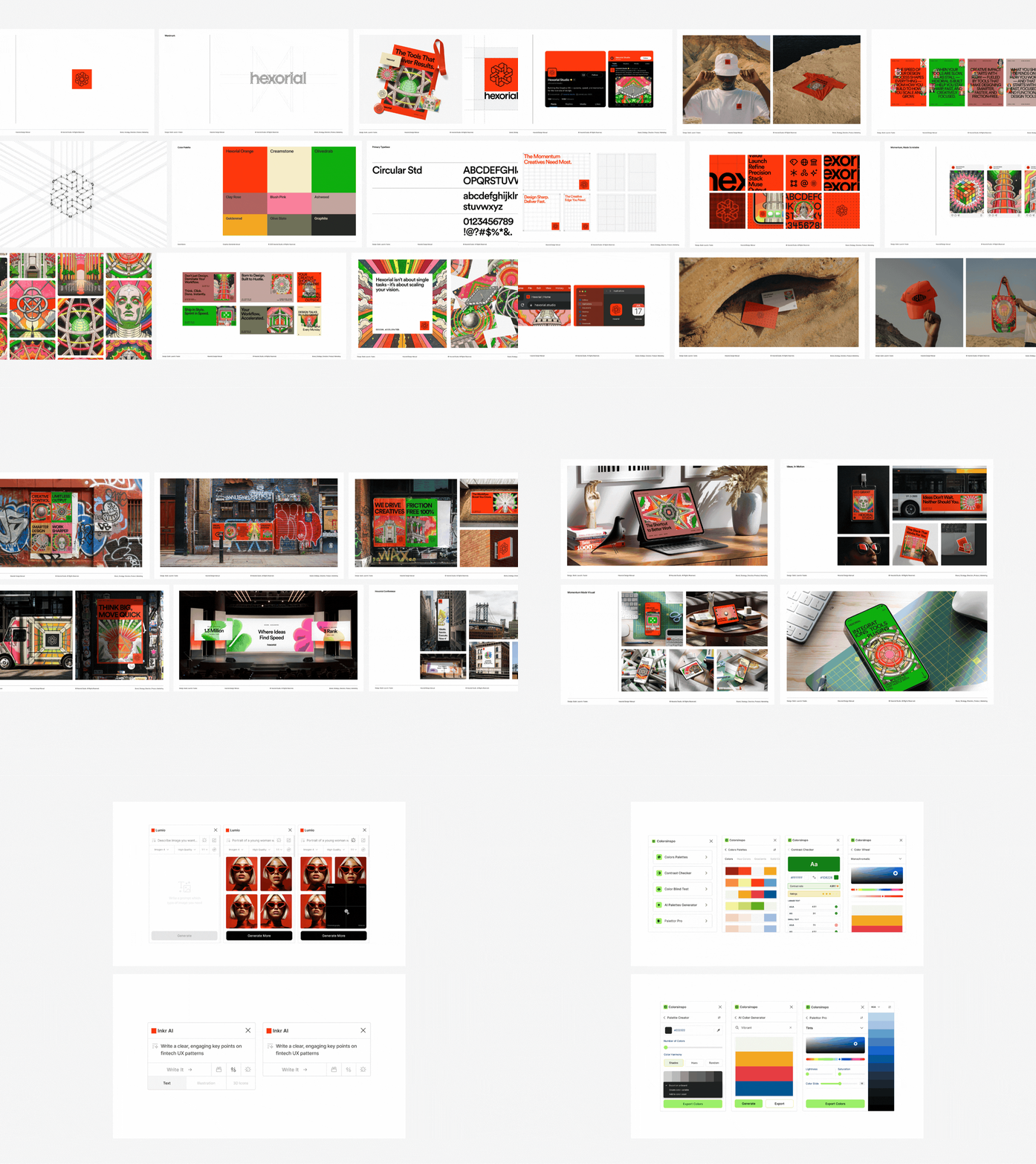
Note: Slowly Rolling Out Our New Design Language.
Until now, we’ve kept visual design in the background - not because it wasn’t important, but because our focus was on building products that worked, scaled, and solved real problems. We wanted the foundation to be rock solid before dressing it up.
Now that we’ve reached that point, we’re slowly rolling out our new design language - starting with our brand identity and the products you use every day. Soon, you’ll see a visual system that reflects the creativity, precision, and ambition we’ve been building toward all along.
Key Learnings
Design is a Business Strategy: At Hexorial, design wasn’t a function; it was the foundation for product traction, user trust, and revenue growth.
You Don’t Need Capital to Build Momentum: We proved that a lean, focused team with clear execution can outperform funded competitors when vision and velocity align.
Simple Experiences Drive Deep Adoption: In complex ecosystems like Figma and Adobe, reducing friction led to exponential user growth and retention.
Systems Create Leverage: Scalable design systems, documented SOPs, and structured feedback loops enabled us to grow efficiently without bloating the team.
Credibility is Built Through Execution: World-class UX, polish, and consistency opened doors to partnerships, grants, and ecosystem-wide recognition, without outreach.
Founder-Led Product Design Unlocks Speed: Direct involvement in design and product decisions allowed us to move fast, stay aligned, and capitalize on emerging user needs.
Distribution is Designed, Not Just Deployed: Growth wasn’t an afterthought; we engineered it into the product experience from day one, making acquisition and retention self-sustaining.
Thanks for reading and taking the time!
If you’d like to know more about me or dive deeper into my work, feel free to reach out. Let’s connect, share ideas, and explore ways we can work together. Contact me anytime, I’d love to hear from you ♥
Let’s connect, email me, or DM me on twitter.
PS: I only present a curated set of visual moments from each company, chosen through my lens of perspective and taste. I’m thankful to everyone who’s been part of this journey, and to the tools, resources, and assets that made it possible.